S3 T2 BAFS
Types of enterprises
Private enterprises
- private individuals
- generating profits
- e.g. sole proprietorship, partnership, limited company.
Public enterprises
- wholly owned by government
- provide essential goods and services to the public
- e.g. Ocean Park / Water Supplies Department
Legal Entity & Limited Liability
Firm -> not a separate legal entity
- no separate legal existence from its owner
- owners enter into contracts, sue, and being sued.
- closed upon withdrawal/death of owners
- owners bear unlimited liabilities
liable for all of the firm's debt without limit
owners use or sell their personal assets to pay off the unsettled debts
Firm -> separate legal entity
- separate legal existence from its owners
- firm enter into contracts, sued, and being sued
- will not be closed upon withdrawal/death of owners
- owners bear limited liabilities
not liable for the firm's debt that is more than their investments
no need to sell personal assets to pay of the unsettled debts
Forms of business ownership
Sole proprietorship
- owned by one person called the sole proprietor
- not a separate legal entity, owner bears unlimited liability
- limited sources of capital
- manged by owner
- e.g. a one-man-owned grocery store
Partnership
- 2/+ owners (partners)
- not a separate legal entity, 1/+ partner bears unlimited liability
- limited sources of capital
- bound by decisions made by the partnership, responsible for consequences of agreement violation
- e.g. a law firm and an audit firm
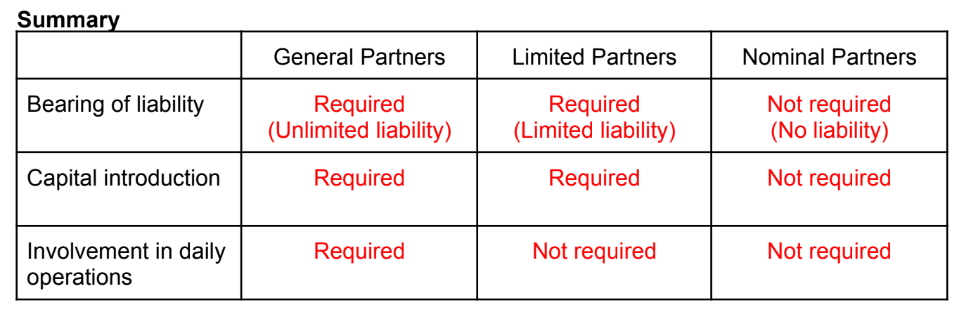
Types of partners
General partners
- will invest money
- bear unlimited liability
- will involve in daily operations and management
Limited Partners
- will invest money
- bear limited liability
- will not involve in daily operations and management
Nominal Partners
- will not invest money
- bear zero liability
- will not involve in daily operations and management
- providing professional advice.
- enhancing the firm’s reputation. Their reputation helps promote the partnership’s business.
- strengthening business linkages.
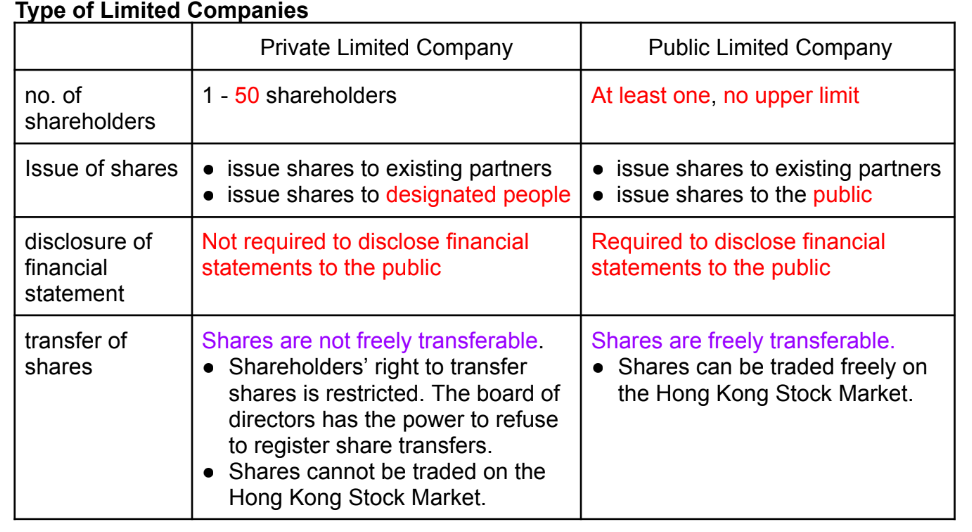
Type of limited companies
Pros/Cons of different forms of business ownership
Sole Proprietorship
- Low setup cost
- Efficient and flexible operations
- Sole claim of profits
- Lower profit tax rates
- Easy transfer of ownership
- Not a separate legal entity
- Unlimited Liability
- heavy workload
Partnership
- Wider sources of capital
- More management skills
- Sharing of work and business risks
- Lower setup cost (compared w/limited company)
- Lower efficiency and flexibility
- Hard transfer of ownership
- Not a separate legal entity
- Unlimited Liability
- Limited sources of capital
Limited Company
- Separate legal entity
- Limited liability
- Wider sources of capital
- Large-scale operations
- Complicated set-up procedures
- High setup costs
- Higher profit text rates
- Lower efficiency and flexibility
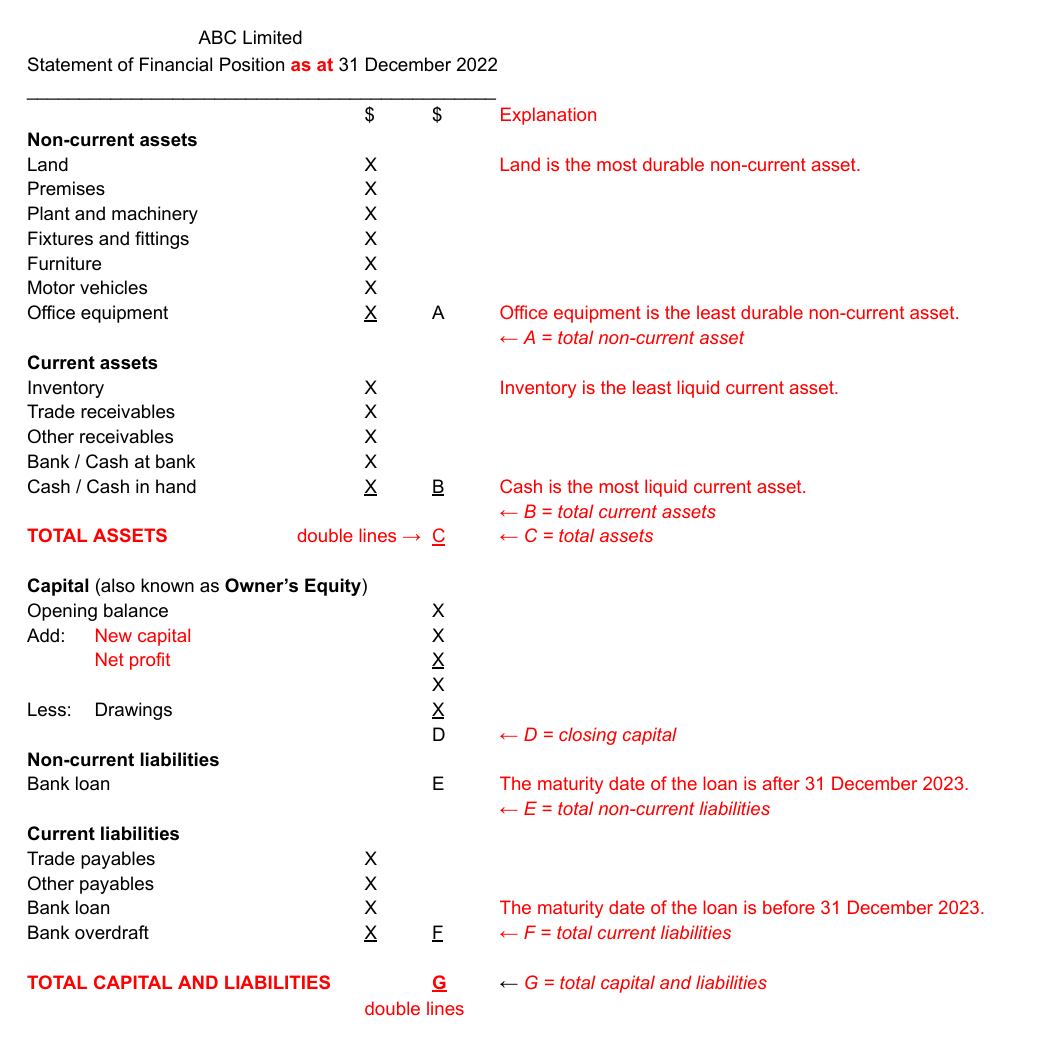
Assets = Capital + Liabilities
Current Assets
- Cash
- Expected to be converted to cash within the next accounting year
Non-current Assets
- Not current Assets
- Needed for operations of the business
- e.g. Furniture, Fixtures/Fittings
Current Liabilities
- Liabilities that are to be repaid within the next account year
- e.g. Bank Overdraft, Interest/Trade payable
Non-current Liabilities
- Liabilities that are will not be repaid within the next accounting year
Assets = Liabilities + Capital + (Revenue - Expense) - Drawings
Revenue - Expensive = cost
Revenues
- Sales Revenue
- Interest Income
- Rental Income
Expenses
- Costs of goods sold
- insurance
- carriage in/outwards
- rent
- salaries
All money related: Capital
- e.g. Rent, resources supplied by owners
- anything money related that is not linked to a physical object or bank
Financial Statement
- Net sales = Sales - returns inwards
- Costs of Goods Sold = Opening inventory + costs of goods purchased - closing inventory
- Costs of goods purchased = purchases + carriage inwards - returns outwards
- Gross Profit = net sales - cost of goods sold
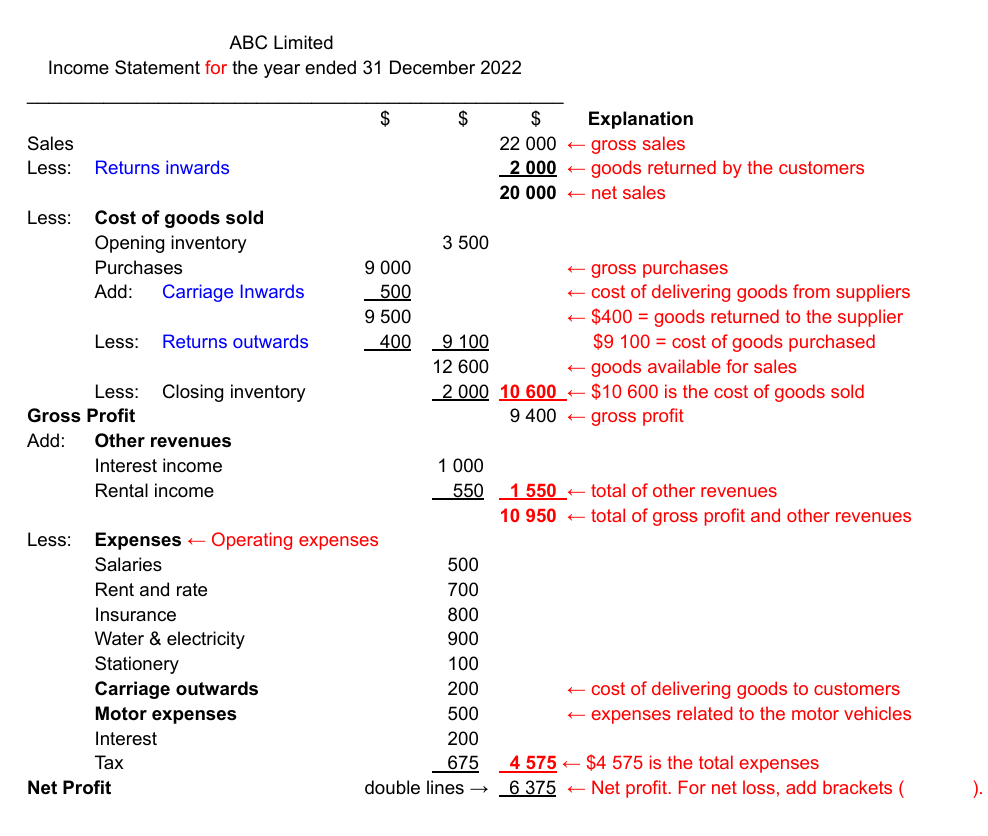
Financial Statement
Non-current assets
Durability: most to least
Current assets
Liquidity: least to most
Liabilities
No specific order
Closing Capital = Opening Capital + Net Profit - Drawings